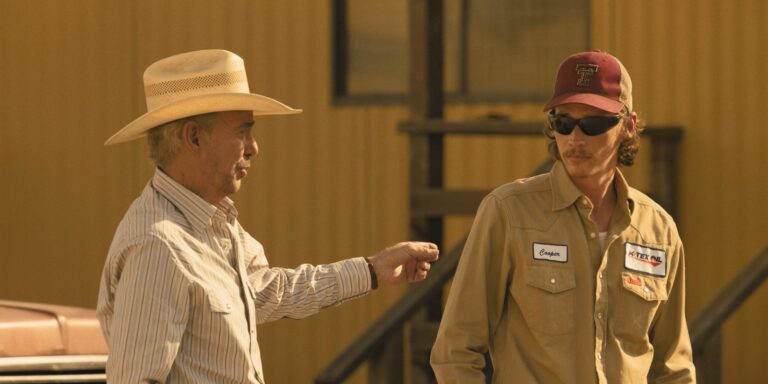

Paramount+ built Landman around Billy Bob Thornton’s Tommy Norris, a West Texas landman turned oil executive. For most of Season 1, Tommy’s past stayed blurry. Viewers heard about hard years and bad choices, but not much about the man who raised him.
Season 2 changes that.
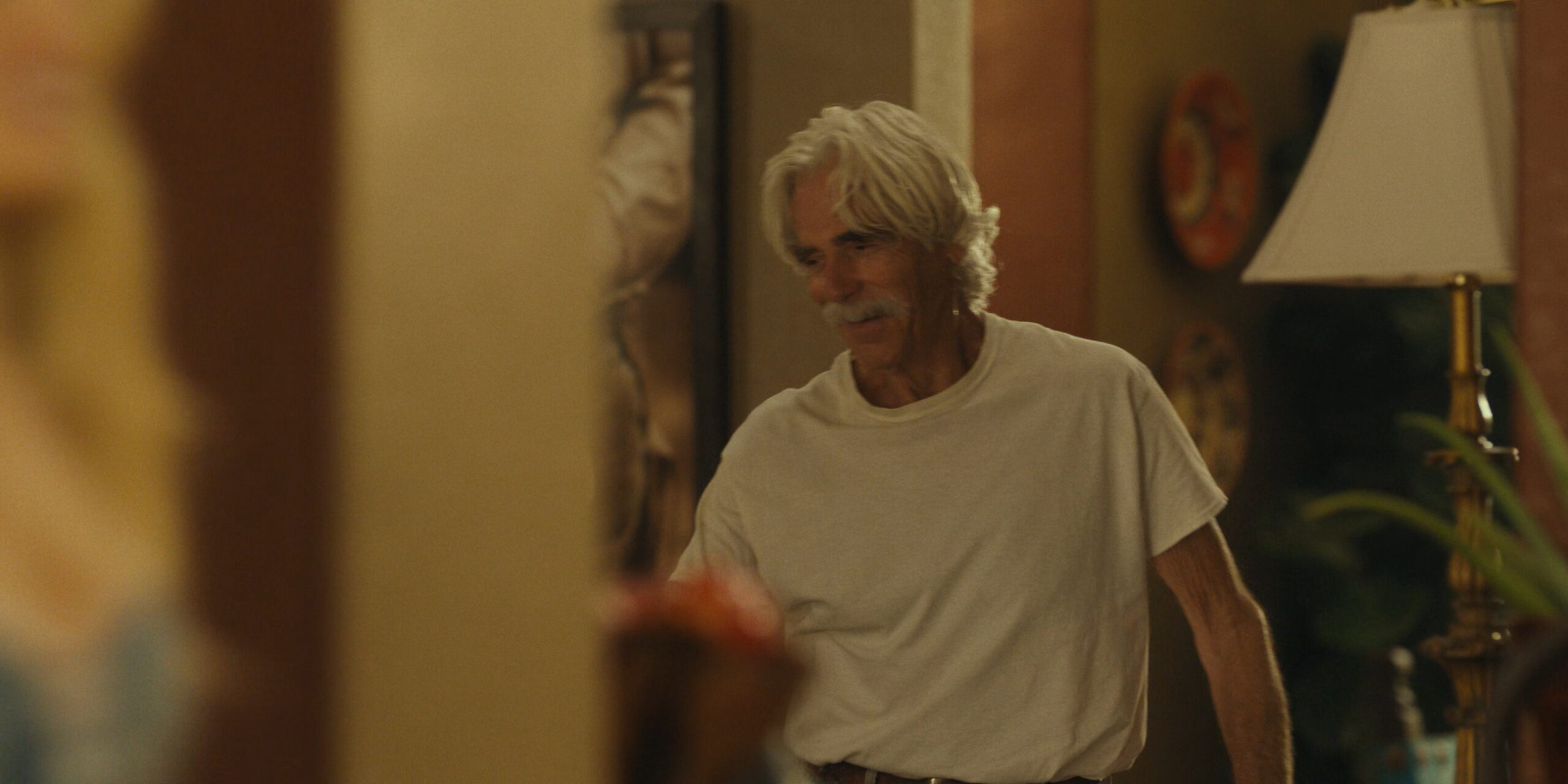
When new episodes began streaming on November 16, 2025, fans finally met Tommy’s father, T.L. Norris, played by Sam Elliott. The casting brought two things at once: an 81‑year‑old Western icon in a wheelchair, and a story about how three generations of Norris men carry the scars of the oil patch.
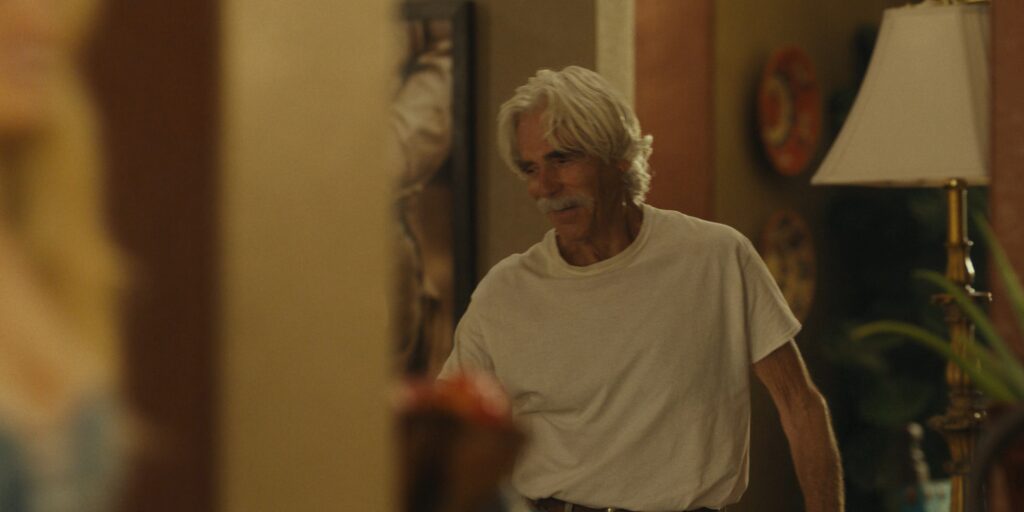
Christian Wallace, the showrunner, has said Elliott’s arrival lets the show finally put “three generations of Norris men” in the same frame and build the “bedrock” family moments of the season. Season 2 now runs on two parallel engines: lawsuits, cartel money, and hydrogen sulfide on one side, then Tommy, his broken father, and his own children on the other.
- How Sam Elliott Ended Up as T.L. Norris
- First Impressions: A Wheelchair, a Sunset, and a Death Notice
- Oil Fields, a Broken Body, and an Estranged Father
- Three Generations in One Frame: T.L., Tommy, and Cooper
- Moving Home: How Angela Forces a Family Reckoning
- Pirate Dinner and Daytime TV: Finding a New Family Rhythm
- Why T.L. Norris Changes the Center of Landman Season 2
- What Happens Next for the Norris Men
How Sam Elliott Ended Up as T.L. Norris
Sam Elliott did not just wander into the Landman universe. According to interviews he has given this fall, it started with a text from Taylor Sheridan. That message led to a phone call, then to a two‑year contract for Elliott to play Tommy’s father, reuniting him with Thornton after they worked together on 1883.
Entertainment outlets first reported his casting on April 29, 2025, describing the role only as a “key character tied to Tommy Norris.” Later trailers and coverage identified the character clearly as T.L. Norris, Tommy’s father.
On paper, the pairing raised eyebrows. Elliott is 81. Thornton is 70. The real‑life age gap is only 11 years. Thornton has said in multiple interviews that they chose not to overthink that. Viewers see Elliott in a wheelchair, frail and worn down, and see Tommy still stomping through oilfield offices and bar fights. “You go, ‘OK, that’s his dad,’” Thornton told The Hollywood Reporter, adding that it works because of how they play the relationship and how Sheridan writes it.
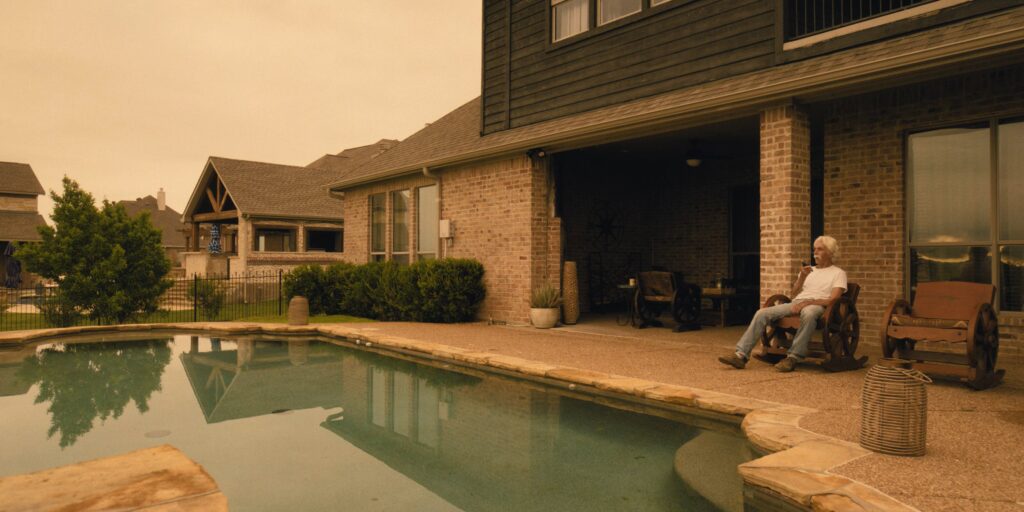
Elliott has been blunt about how much the part hit him. He has called T.L. “very emotional for me… this part and this full season. Moreso maybe than most of the other things I’ve done.” He says he spent a good part of the shoot in tears and credits Sheridan’s scripts for making that possible.
On set, he is not slipping in and out like a guest star. Co‑star Kayla Wallace told People on December 15 that Elliott “never leaves” the Landman set, often arriving early and staying even when he is not scheduled. She described him as a steady, almost permanent presence for the ensemble.
That constant presence matches how Season 2 uses T.L. He is not a flashback or a one‑off cameo. He becomes a piece of the show’s daily life.
First Impressions: A Wheelchair, a Sunset, and a Death Notice
Viewers meet T.L. in Season 2, Episode 1, “Death & A Dry Hole,” which premiered alongside the season on November 16.
The first image is simple and harsh. T.L. sits in a wheelchair outside Prairie View Assisted Living, somewhere in West Texas, staring at the open sky. Staff members try to wheel him inside for supper. He refuses. He argues about the exact time of sunset and insists he will stay outside until the light is gone.
Recaps in outlets like Esquire and Men’s Health zeroed in on that moment. Elliott, they noted, had not taken a single step. He did not need to. Viewers understood T.L. immediately as a man whose body is failing, whose world has narrowed to one daily ritual: watching the sun go down.

The scene turns quickly. An employee named Hank walks out and tells T.L. that Dorothy, his wife and Tommy’s mother, has died after an afternoon nap at a separate memory‑care facility. There is no buildup. No gentle language. Just the fact.
T.L.’s response sets the tone for his character. He tells the worker, “I recommend you find a way to die quick,” and then adds that if he sees Dorothy again, “that means I’m in hell, too.” It is grief expressed as bitter humor and a refusal to pretend anything ended peacefully.
The episode closes by cross‑cutting between two sunsets: T.L. alone outside Prairie View, and Tommy at home with Angela as he tells her, “My mother died.” It is the first time the show visually connects father and son. Both watch the same sky in different places, both suddenly without Dorothy.
Oil Fields, a Broken Body, and an Estranged Father
The show and the actors are careful about the language around T.L.’s disability. Critics and fan sites often call him “wheelchair‑bound,” because that is how he appears in every scene so far. On screen, Tommy uses harder words.
In Episode 2, “Sins of the Father,” Tommy lays out T.L.’s physical and emotional history during a car ride with his son, Cooper. He explains that “all your grandfather did was work himself into being a cripple out on the rigs, come home and get drunk enough to deal with my damn coked‑out tornado of a mother, then come in my room and try to beat his failures all out of me.”
It is one of the clearest pieces of backstory in the series. In a few sentences, he links T.L.’s body to the oil fields, to chronic pain, to alcohol, and to violence. Recaps across The Cinemaholic, Taste of Country, and other outlets have highlighted that speech as a turning point. It snaps T.L. into focus as more than a gruff old man in a chair.
That speech also confirms what many reviews had already called him: an estranged father. Entertainment coverage has consistently described T.L. as “long‑absent” or “estranged.” Season 2 never shows the exact moment when Tommy and T.L. split, but it shows the damage that followed.
Later episodes add more layers. In Episode 4, Tommy tells Ainsley that his baby sister died of SIDS at four months old. That loss, he says, “broke” Dorothy. According to his story, she “drugged and drank her soul to death.” He describes finding her naked and face down in a bathtub when he was 14, performing CPR until she puked water, then getting kicked in the face as she immediately poured another drink.
Sam Elliott has echoed that emotional landscape in interviews. He has described T.L. as a “fractured man” whose life was shattered by his wife’s descent into addiction. In his words, T.L. “waited 60 years for her to come back, and she never did.” That sentence explains much of his silence and anger.
Together, those details build a clear line. T.L. worked in the oil fields until his body broke. Dorothy never recovered from their daughter’s death. Violence and addiction filled the house. Tommy left that life, but he carried the pattern forward, even if he chose different methods.
Three Generations in One Frame: T.L., Tommy, and Cooper
Christian Wallace has called the Norris men “the bedrock of the show” in Season 2, and the first real three‑generation scene arrives early.
In Episode 2, Tommy takes Cooper to Prairie View to meet T.L. properly. The meeting is not warm. T.L. is skeptical of Cooper and immediately asks if he does “an honest day’s work or [is] cheating the world like your old man.” He complains about his pain, describing himself as an 82‑year‑old who feels like he has been in a “car crash” every day.
The three of them share the frame: T.L. in the wheelchair, Tommy holding tension in his jaw, Cooper absorbing everything silently. It is the visual that Wallace was talking about when he said Elliott’s casting finally gave him three generations to work with.
On the drive back, Tommy and Cooper have what has become one of the season’s key conversations. Tommy tells his son, “I wasn’t raised to father a son.” He explains the beatings, the drinking, and Dorothy’s cocaine use. He then gives Cooper a blunt warning: “However you raise your son is how he’s gonna raise his son… that cycle is almost impossible to break.”
Cooper’s answer is the emotional release. “You broke it,” he says. “I love you, Dad. You did your best, and your best is good enough for me.” Actor Jacob Lofland has since said that he and Thornton both drew on their own experiences of losing fathers to ground that scene.
Michelle Randolph, who plays Ainsley, told Us Weekly it was “fun for Ainsley to learn more about her dad” once T.L. arrived, because the character finally sees why Tommy is so hard and so driven. For viewers, the three‑generation setup makes the Norris empire feel less like a backdrop and more like a family inheritance, both financial and emotional.
Moving Home: How Angela Forces a Family Reckoning
The dynamic shifts again around Dorothy’s funeral in Episodes 3 and 4.
After the service, Tommy, T.L., and several relatives share a tense meal. Tommy, in front of his father, tells the bathtub story and other memories of Dorothy’s addiction. T.L. sits with it, hearing what those years looked like from his son’s viewpoint.
Away from the table, Angela is dealing with her own feelings about elder care. She has been volunteering at a nursing home and has seen the loneliness there. When she hears T.L. describe Prairie View Assisted Living as “an old Motel 6 they converted into a place where we wait to die,” it lands hard.
Without much consultation, Angela decides T.L. should move into the Norris home. When she tells Tommy, he reacts badly. He has carried the memory of an abusive father for decades and has kept that man at a distance. The idea of putting him in a guest room is too much at first.

Yet when the time comes, Tommy is the one who goes to Prairie View. He loads T.L.’s belongings and tells him, “I already got your things. You ain’t ever setting another foot in that place.” It is a practical gesture and, quietly, a promise. Whatever T.L. did, Tommy will not leave him to die in a stripped‑down facility.
From that point on, the Norris home stops being just a symbol of new oil money. It becomes a multi‑generation house, with a frail patriarch in the corner, children passing through the kitchen, and a middle‑aged son trying to keep the walls from closing in.
Pirate Dinner and Daytime TV: Finding a New Family Rhythm
Once T.L. moves in, the show lets the family experiment with normalcy, at least by Norris standards.

Episode 5, “The Pirate Dinner,” is the clearest example. Angela throws a pirate‑themed party at “Chateau Norris” specifically to welcome T.L. “back into the fold.” She researches his favorite foods and puts on a seafood boil with shrimp, crab, corn, and sausage. It is silly, loud, and unsteady, but it is the first time anyone in that house has publicly celebrated T.L.’s presence.
Critics at Men’s Health and elsewhere pointed to that party as a rare warm stretch in a season otherwise dominated by corporate warfare and environmental disaster. It marks the moment when T.L. is no longer just a visitor from a care facility. He is part of the household.
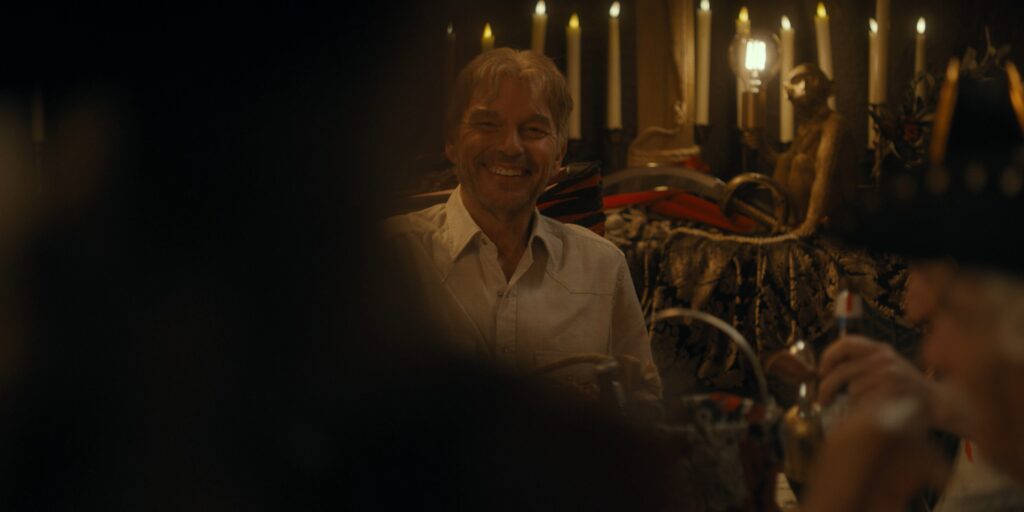
The same episode also features the scene that briefly pushed Landman into broader culture sections: Tommy and T.L. riffing on The View. Watching the talk show, Tommy calls it “a bunch of pissed off millionaires bitching about how much they hate millionaires and Trump and men and you and me and everybody else,” then compares its jokes to “a fart in church.”
The exchange is pointed and profane. It also quietly shows how father and son now operate under one roof. They share political gripes, they share jokes, and they navigate the television remote together like many families. The harsh history is still there, but so is a shared sense of humor and a willingness to sit beside each other.
Why T.L. Norris Changes the Center of Landman Season 2
On paper, Season 2 is about expansion: more episodes, more cartel entanglements, more corporate threats. In practice, many critics have argued that the show’s most compelling material sits in the living room with T.L. and Tommy.
Christian Wallace has said Elliott’s character allowed him to write “really beautiful moments of heartfelt family moments” and that those scenes form the emotional base of the season. Instead of only tracking lease deals and well blowouts, the show now spends real time on who gets to break a generational pattern and who fails.
Sam Elliott frames T.L. as a “broken man who does nothing but sit and watch the sunset” at the start. Over the course of the season, he says, viewers watch “a lot of pain to heal between the two characters, and it’s going to happen over time.” Billy Bob Thornton, for his part, has admitted that playing anger toward Elliott is tough, because he “loves him so much in real life.”
Away from the cameras, their decades‑long friendship gives Stevenson and Wallace confidence to write sharper scenes. On camera, the result is a father — son relationship that feels lived‑in, not invented mid‑series.
A Landman‑focused blog recently described T.L. as the peak of a triangle: the dying past of roughneck oil culture, the embattled present in Tommy, and the uncertain future in Cooper and Ainsley. While that is commentary rather than canon, it lines up with what the show is doing week to week.
T.L. carries the physical cost of the oil boom. Tommy carries the money and the guilt. Cooper and Ainsley inherit both, along with the chance to do something different.
What Happens Next for the Norris Men
As of mid‑December 2025, Landman Season 2 has reached Episode 5, “The Pirate Dinner.” Paramount+ is rolling out the 10‑episode season weekly, with the finale scheduled for January 18, 2026. The series has already been renewed for a third season, and Elliott has confirmed he signed a two‑year deal when he came aboard.
Those facts position T.L. Norris as more than a one‑season device. The wheelchair on the patio, the sunset, the Motel 6 comparison, the pirate party, and the fight over how to raise sons all point toward a longer arc about what the Norris name really costs.
For now, the show has finally answered a question that hung over its first year: who made Tommy Norris. The answer, embodied by Sam Elliott’s T.L., is not simple. He is an abusive father, a grieving husband, a broken oil‑field hand, and an old man who still wants to see the sun go down on his own terms.
Season 2 spends its best hours watching Tommy, Cooper, and Ainsley decide what to do with him. Viewers now get to watch all three generations share one house, one business, and one history, as the sunsets keep coming and the wells keep pumping.