


- “Shallow” Women Get Even Messier In Landman Season 2
- Quick recap: what feminists were mad about in Season 1
- Season 2: schedule, setup, and what actually changes
- Cami: from trophy wife to oil queen… or just better wardrobe?
- Angela: a more serious arc, still in a familiar shadow
- Ainsley, Ariana, Rebecca: the next generation and the same old patterns
- Is this depiction or endorsement? The core gender argument
- What happens next
“Shallow” Women Get Even Messier In Landman Season 2
When Landman premiered on Paramount+ on November 17, 2024, Taylor Sheridan delivered exactly what his brand promises: oilfields, big hats, bigger egos, and men making brutal choices in West Texas. The show, based loosely on the 2019 Texas Monthly podcast Boomtown, centers on landman Tommy Norris (Billy Bob Thornton) navigating the Permian Basin’s high‑stakes energy deals and the human wreckage around them.
Pretty quickly, though, a parallel conversation emerged online and in reviews: are the women in Landman just set dressing for the boys’ club? Season 1 drew repeated criticism for “shallow” and hyper‑sexualized female characters. By the time Paramount+ renewed the series in early 2025 after what the streamer publicly called “strong viewership and completion numbers” for its first season, that criticism had become a regular part of how people talked about the show.

Season 2 started rolling out on Paramount+ on November 16, 2025, with weekly episodes following. With more episodes and more screen time for its women, the question from a lot of feminist commentators and casual viewers alike has shifted slightly: is Sheridan actually trying to answer the criticism, or is he leaning into it so hard that it feels like trolling?
This piece looks specifically at what changes for the women in Season 2, how those changes connect to gender politics in the show, and why some critics say the “shallow” women have somehow become even shallower.
Quick recap: what feminists were mad about in Season 1
To understand the heat around Season 2, it helps to be precise about what set people off the first time.
Season 1 introduced a handful of prominent female characters around Tommy and the oil business, including:
- Cami Pike, the glamorous wife of oil tycoon and M‑Tex owner Dudley Pike, situated in a world of country‑club money and marital misery.
- Angela Norris, Tommy’s ex‑wife, battling addiction and resentment in the shadow of her ex‑husband’s career.
- Ainsley Norris, their daughter, caught between her father’s deals and her own attempts to live outside the oil‑patch script.
- Ariana and Rebecca, younger women orbiting the wealthy players, often framed through how they affect the men’s decisions.

Across social media, Reddit threads and several TV criticism blogs in late 2024 and early 2025, three main complaints kept coming up:
1. Women as accessories
Female characters were frequently described as wives, exes, mistresses, or daughters first, and only secondarily as people with their own goals. Critics flagged early episodes in which Cami’s scenes largely revolved around affairs, parties and wardrobe choices, rather than any meaningful say in M‑Tex’s direction.
2. Addiction and trauma as props
Angela’s substance abuse struggles drew particular criticism. Some feminist reviewers argued that the show used her addiction more to “explain” Tommy’s choices and guilt than to explore her as a person in crisis, pointing to episodes where her relapse scenes were tightly tied to Tommy’s emotional arc rather than her own recovery or support system.
3. Body before story
Several episode recaps and comment threads highlighted the way the camera and dialogue emphasized women’s looks, youth and sexuality. Fans compared this to how male characters were allowed to be older, flawed and powerful without having their appearance dissected in the same way.
To be clear, not all critics agreed. A number of reviewers praised the show’s “honesty” about how women are treated in oil‑patch culture, arguing Sheridan was depicting misogyny rather than endorsing it. But by the time Season 2 marketing started in mid‑2025, “Landman has a women problem” was a recognizable talking point, especially in feminist and media‑criticism spaces.
Season 2: schedule, setup, and what actually changes
Season 2 debuted on Paramount+ on November 16, 2025, with a weekly release schedule rather than a full binge drop, a pattern Sheridan’s other series have increasingly followed to keep conversation going between episodes. Trade outlets and entertainment sites that covered the rollout noted a clear shift in the marketing emphasis: trailers and cast breakdowns talked much more about Cami, Angela and Ainsley, and less about Tommy alone.
Entertainment Weekly and Screen Rant both published Season 2 cast and character guides in the run‑up to the premiere. Those guides highlight some structural changes in the story:
- Cami moves closer to the power seat. After Season 1’s finale upheavals at M‑Tex, Season 2 positions her not just as Dudley’s unhappy wife but, in some episodes, as a central player in the company’s future.
- Angela gets a tentative “redemption” track. Press materials tease an arc more focused on her attempts at sobriety and stability, rather than using her solely as a source of chaos in Tommy’s life.
- Ainsley steps into the business world. Season 2 leans further into the idea that the next generation, including Ainsley, has to decide whether to reject or inherit the oil machine.
On paper, that sounds like exactly what early critics were asking for: women with more agency, closer to the money, making choices that hit the plot, not just the protagonist’s feelings.
However, early reviews and social media reactions from November 2025 suggest the reality is more complicated.
Cami: from trophy wife to oil queen… or just better wardrobe?
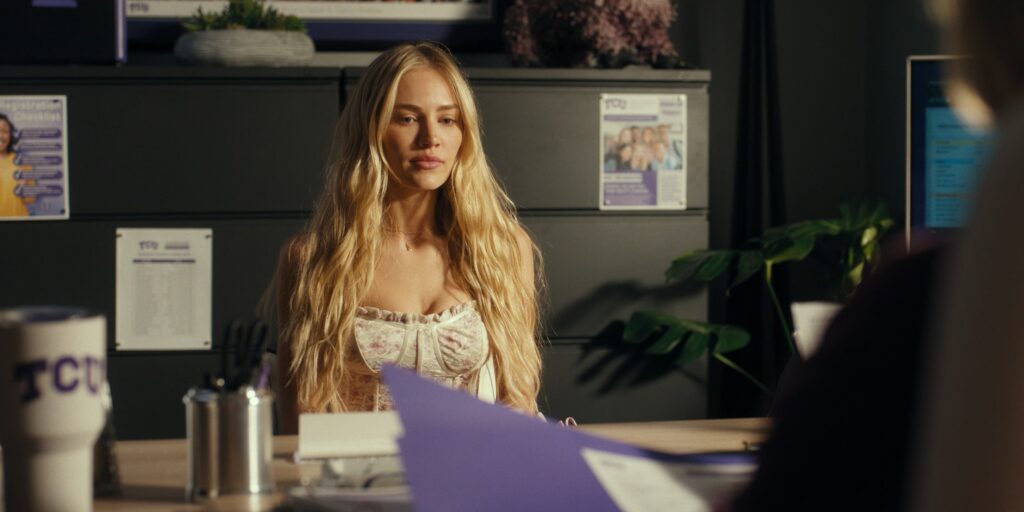
If there is a single bellwether for Sheridan’s approach to women in Landman, it is Cami. In Season 1, many feminist critics and regular viewers called her the archetypal “trophy wife”: stunning, frustrated, often reduced to cheating and scheming in richly decorated rooms while the men did the real business elsewhere.
Season 2 brings her much closer to the core power struggles. As various recaps and cast features point out, she now has a more tangible stake in M‑Tex and appears in more scenes where deals, not just affairs, are on the table. She takes meetings, makes demands and pushes back against male counterparts.
Yet, this is where the “is Sheridan trolling?” question really kicks in. Online commentary after the first two episodes includes a pattern:
- Some viewers argue that even when Cami is technically in the boardroom, the framing still prioritizes how she looks, what she is wearing, and how her sexuality affects negotiations.
- Others note that her moves are often written in a way that undercuts her long‑term competence, portraying her as impulsive, vindictive or shortsighted, even when she is nominally in a position of control.
In other words, the show gives her more power, but continues to code that power through seduction, spite and social maneuvering rather than expertise or strategic thinking. Critics who already considered her shallow in Season 1 see this as a doubling‑down: now she has more screen time, but the underlying characterization has not deepened as much as they hoped.
This is where accusations of “trolling feminists” surface. A minority of commentators argue that Sheridan is essentially saying, “You wanted powerful women? Here you go, but they are still going to be messy, sexual and compromised,” almost as a response to the earlier backlash.
Angela: a more serious arc, still in a familiar shadow
Angela’s storyline in Season 2 is the other key test. Press coverage ahead of the premiere highlighted that she would get more focus on recovery and rebuilding, with scenes that are less about wrecking Tommy’s day and more about her starting over.

Early episode reviews note that Season 2 spends additional time on Angela in counseling, work and family settings that do not always include Tommy. For critics who felt Season 1 used her as a narrative device, this shift matters. It moves at least part of her story outside his orbit.
That said, reactions in November 2025 show the split continuing:
- Some feminist writers welcome her expanded emotional range and point out that addiction storylines are rarely tidy, so her setbacks and bad decisions still track as realistic.
- Others say that the show persists in tying her most dramatic moments to Tommy’s emotional beats and business pressures. Even when she takes steps forward, those steps often create new problems he has to manage.
As with Cami, the question is not whether the show adds more scenes. It is whether those scenes fundamentally change who the character is in the narrative. For a significant slice of critical viewers, Angela is somewhat less shallow in Season 2 but still written primarily in relation to the male lead, which blunts the sense of progress.
Ainsley, Ariana, Rebecca: the next generation and the same old patterns
Beyond Cami and Angela, Season 2 also extends the lives of younger women in the Landman orbit. Ainsley, in particular, gets more direct exposure to the business that has shaped and harmed her family. Plot summaries and reviews describe her attending industry events, pushing back against older men’s expectations and wrestling with what kind of life the oil economy allows her to build.
That development has drawn more positive notice. Several critics highlight Ainsley as the show’s best hope for a woman who is neither fully complicit nor simply collateral damage. She is allowed to question the system openly and to make choices that have real consequences beyond relationships.
Meanwhile, characters like Ariana and Rebecca continue to stir debate. Their storylines still lean heavily on their romantic and sexual entanglements with powerful men. Even when Season 2 offers them moments of insight or agency, a number of commentators argue that the camera and dialogue keep returning to how their bodies and desirability shift the balance of power.
Put together, this creates an odd mix: one or two younger women showing hints of a more complex path, surrounded by others who remain locked in familiar, highly gendered roles. For some viewers, that spread feels realistic to West Texas oil culture. For others, it reads as a pattern Sheridan keeps choosing rather than a world he is critiquing.
Is this depiction or endorsement? The core gender argument
Underneath all the episode‑by‑episode reactions, the core dispute around Landman in late 2025 looks a lot like the argument people have about Yellowstone and Tulsa King:
- One side says Sheridan is holding up a mirror to particular male‑dominated subcultures. In this view, the shallow, sexist behavior on screen is there to show how these environments actually treat women. The fact that so many female characters are trapped in constrained, appearance‑driven roles is the point, not a writer’s fantasy.
- The other side says that the shows repeatedly stop short of real structural critique. They argue that the scripts and camera language often reinforce the same old hierarchies under the cover of “realism.” When women are almost always framed through sex, trauma, or their impact on male pain, it starts to feel like a pattern of endorsement rather than exposure.
Season 2 of Landman gives each camp more material. Supporters of Sheridan’s approach can point to Cami’s presence in business decisions, Angela’s attempts to reclaim her life and Ainsley’s push against the old guard as proof that the women are not just window dressing.
Critics, particularly feminist reviewers, counter that the fundamental dynamics have not shifted much. They note that even when women step into positions of power, the scripts tend to emphasize their emotional volatility, sexuality, or relational drama over their professional competence or independent goals.
That is where the “trolling” accusation creeps in: the show seems to acknowledge the earlier criticism by expanding the female roles, but it does so in ways that, for some viewers, underline every stereotype they objected to in the first place.
What happens next
As of November 2025, only the first wave of Season 2 episodes and reviews are out, and weekly drops mean the conversation will keep evolving. Paramout+ has not released full Season 2 viewership numbers yet, but the renewal timing and ongoing marketing push signal that the streamer sees Landman as a long‑term player alongside Sheridan’s other franchises.
For now, the gender debate around the show is not dying down. If anything, Season 2 has intensified it by giving more screen time to women without fully escaping the accusations of shallowness. Some viewers see that as intentional provocation, a kind of narrative shrug at feminist critique. Others think the incremental changes point to a writer trying, slowly and unevenly, to give his female characters a little more room.
As more episodes land through the winter schedule, the real test will be whether Cami, Angela, Ainsley and the rest are allowed to make decisions that reshape the story’s power structure, not just its romantic subplots. If Landman keeps the women close to the center of the deals, rather than merely the bedrooms and rehab centers around them, the “trolling” narrative may soften.
If not, expect the argument over Sheridan’s women to remain as loud as a pumpjack in full swing, season after season.