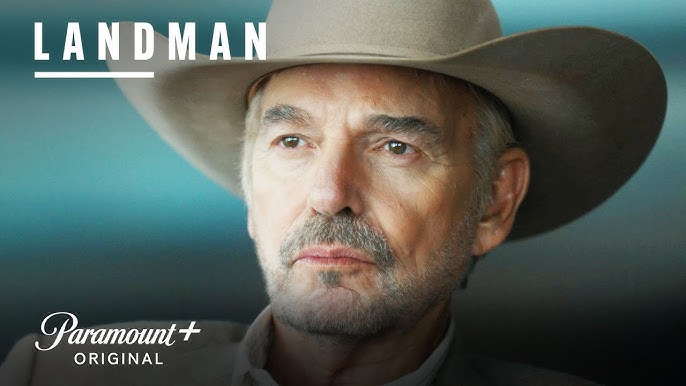


Season 2 of Landman ended by blowing up Tommy Norris’ old life and handing him a new one. It also did it in a surprisingly concrete way. The finale did not just tease “a fresh start.” It put a name on paper, assigned job titles, and attached a real dollar figure to the first hurdle.

That new company is CTT Oil Exploration & Cattle, LLC. Multiple outlets, including Esquire and Yahoo Entertainment, describe it as the Season 2 endgame and the Season 3 launchpad. Tommy gets pushed out of M‑Tex, then turns around and builds something new with his inner circle. (Esquire, via its Season 2 finale recap; Yahoo Entertainment, via multiple finale explainers.)
The obvious headline for Season 3, then, is not simply “Tommy goes independent.” It is “Tommy starts a company.” That shift changes the kinds of fights the show can stage. It also changes who can betray whom, and what it costs.
- Season 3 is renewed, but Paramount+ is still holding dates close
- CTT is not a mystery acronym. It is a family and ally map.
- The finale assigns a full leadership team, and that opens the door to internal pressure
- Ethical oil is not a vibe here. It is tied to a specific profit promise.
- Gallino’s financing gives CTT a lifeline, but it also gives them a shadow
- Cooper’s legal crisis clears, and that timing is not accidental
- The show’s realism pitch comes from “Boomtown” and the West Texas boom
- The audience split is part of the context, even as the numbers climb
- Where Season 3’s story pressure is likely to land, based on what the finale locks in
- What Happens Next: the few facts that will define the wait for Season 3
Season 3 is renewed, but Paramount+ is still holding dates close
First, the business side of the show matters here, because it helps explain why the writers ended Season 2 with such a clear springboard.
Paramount+ renewed Landman for Season 3 on December 5, 2025, while Season 2 was still running. That renewal was reported by Landman.tv. At the same time, at least as of January 2026, there is still no official Season 3 premiere date announced. Decider noted that gap in a January 2026 update.
You can see why Paramount+ moved quickly on the renewal, though. TheWrap reported that the Season 2 premiere on Nov. 16, 2025 hit 9.2 million global views in two days, and that number represented a 262% increase over the Season 1 premiere. TheWrap also reported a 320% increase in Season 1 viewing after Season 2 launched.
Then the finale numbers came in even louder. TheWrap reported the Season 2 finale on Jan. 18, 2026 drew 14.8 million global views in two days, which was 70% higher than the Season 1 finale. TheWrap also reported that Season 2 episodes 1 — 9 averaged 14.9 million global views in their first seven days, a 58% increase over Season 1.
Those are not small deltas. They are renewal fuel. They also help explain why the show’s ending was designed like a starting line.
CTT is not a mystery acronym. It is a family and ally map.
The name CTT is not just branding. Yahoo Entertainment explicitly describes what the letters stand for: Cooper, Tommy, and Thomas. “Thomas” refers to T.L., played by Sam Elliott.
That detail matters because it frames what Season 3 is likely to test. A company name built from people is also a promise. It suggests loyalty. It also suggests a chain of responsibility if things go wrong.

At the same time, the “Oil Exploration & Cattle” part of the name carries its own meaning. Yahoo’s ending coverage describes the “cattle” wording as a practical move, tied to forming the LLC and making the name work on paper.
So, before Season 3 even begins, the company is already doing two things at once. It is sentimental, because it is literally initials. However, it is also tactical, because the rest sounds like something you file quickly when you need a legal entity now.
That mix fits Tommy. It also sets up the “underdog vs. empire” dynamic in a very grounded way.
The finale assigns a full leadership team, and that opens the door to internal pressure
One of the most important Season 2 finale choices is that Tommy does not found CTT alone. Yahoo Entertainment’s ending explanation lays out a full internal org chart. It reads less like a vague dream and more like a startup staffed overnight.
Here is what the show establishes:
- Cooper becomes president.
- Tommy becomes senior vice president.
- Nate becomes treasurer.
- Rebecca becomes COO and also chief counsel.
- Dale leads exploration.
- T.L. oversees drilling.
- Boss runs the crew.
- Tommy offers Ariana an office manager job.
This structure is a Season 3 engine. It gives the writers a way to create conflict that is not just external. Every title is a leverage point.
For example, “chief counsel” is not a decorative label. If Rebecca has both COO authority and legal power, she can shape risk tolerance and strategy. Meanwhile, if Cooper is president, the show can put a young leader in rooms he is not fully prepared for, while still making it believable that he gets the seat.
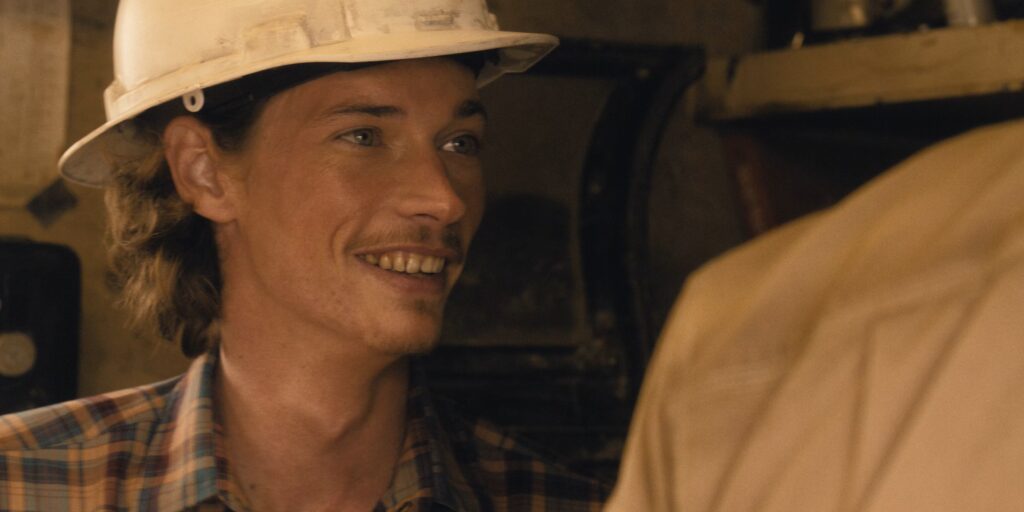
Even the smaller staffing choices matter. Tommy offering Ariana an office manager position is not just a kindness. It’s a decision that brings her directly into the company’s day-to-day life. It also means that any threat to the company becomes personal for someone outside the old oilfield core.
Ethical oil is not a vibe here. It is tied to a specific profit promise.
Season 3 speculation often gets loose. This is where the finale provides a hard anchor.
Yahoo Entertainment reports that Tommy’s plan includes pooling 25% of profits for employees. On its face, that sounds like an attempt to build something more equitable than the system that chewed people up at M‑Tex.
That number creates a clean narrative lane for Season 3. Tommy can pitch CTT as a different kind of operator. Yet the show can also pressure-test whether that promise survives contact with cash flow, debt, and human nature.
It also creates an immediate question: how do you keep that promise if the deal terms you took are aggressive?
Gallino’s financing gives CTT a lifeline, but it also gives them a shadow
The most specific “new war” fact in the reporting is money. Yahoo Entertainment describes the financing mechanics in a way that reads like a plot device designed to generate obligations.

The key numbers:
- A backer has to pay $44 million to M‑Tex for leases.
- The deal includes a 70% recoup for the financier before it shifts to a 50 — 50 split.
Yahoo also reports that Tommy turns to Gallino (played by Andy Garcia) when other money sources decline.
It is hard to overstate what those terms can do to a story. A 70% recoup structure is not just “investor gets paid back.” It means CTT can be producing, working, and risking lives, while most early money flows out the door to satisfy the deal.
That is a built-in tension with the ethical promise. If Tommy tells people 25% of profits go to workers, but the investor gets 70% until recoup, the company may be profitable on paper while still strapped in reality.
It also sets up underdog vs. empire with an extra twist. CTT can fight the old empire of M‑Tex. However, it might also end up answering to a new empire, depending on how Gallino operates.
Cooper’s legal crisis clears, and that timing is not accidental
Season 2 ended with Cooper positioned as president, and the finale also removes a major obstacle. AOL’s coverage of the finale says the immediate murder-charge threat is resolved using a specific fact: Ariana’s attacker died of a heart attack, rather than from Cooper’s blows.
That’s a very plot-specific resolution. It also matters for Season 3 because it allows Cooper to move forward publicly, at least in the legal sense, rather than having to lead a company from the shadows.
At the same time, “not charged” is not the same as “not marked.” Season 3 can still explore how that event follows him. The show now has the freedom to make it a character and community issue, not a courtroom procedural.
The show’s realism pitch comes from “Boomtown” and the West Texas boom
If you want to understand why Landman keeps returning to deals, leases, crews, and power, it helps to remember what the show says it is.
Entertainment Weekly reports that Landman is co-created by Taylor Sheridan and Christian Wallace, and it is inspired by Wallace’s Texas Monthly podcast, “Boomtown.” EW also describes the show as drawing on the West Texas oil boom, while still operating as a dramatized series.
That creative DNA points toward what Season 3 can plausibly focus on. The show can keep its conflicts rooted in systems. It can make fights about leases, drilling, and money, not only personal grudges. CTT is a perfect vehicle for that style, because a new company is basically a stack of systems under stress.
The audience split is part of the context, even as the numbers climb
There is another piece to keep in mind going into Season 3: the conversation around the show is not universally warm.
Landman.tv reported on an audience divide reflected on Rotten Tomatoes in late November 2025, describing critics and audience scores moving in different directions even as viewership rose. It is not a small detail, because it suggests the show can be polarizing while still pulling huge streaming numbers.
That matters because Season 3 will likely continue to push into topics that divide viewers. Oil is politics. Labor is politics. “Ethical oil” is politics. If Season 2’s growth rewarded the show’s approach, there is little incentive to soften it.
Where Season 3’s story pressure is likely to land, based on what the finale locks in
Season 3’s “future” is still unwritten on screen. Paramount+ has not released a date or an official plot synopsis, at least based on the facts above. However, the finale’s concrete details create a few clear pressure points that the show can push without inventing new pieces.
1) Underdog vs. empire becomes structural, not symbolic
CTT starts as a named LLC with defined roles and a high-stakes lease situation. Meanwhile, Tommy’s old world still exists, and he did not leave it on his own terms. Esquire frames the finale around Tommy being pushed out of M‑Tex and creating CTT afterward.
That sets up a rivalry that does not need to be exaggerated. If M‑Tex still controls major assets and relationships, CTT begins behind. Yet CTT also begins with people who know the field and know how M‑Tex operates.
2) Ethical oil becomes a promise that can be tested every episode
The Yahoo-reported plan to pool 25% of profits for employees is a simple number with big implications. It invites conflict with investors, competitors, and even internal leaders who see risk differently.
It also invites tension with the recoup terms. If Gallino’s deal requires 70% recoup before a 50 — 50 split, the show has a built-in way to ask: how ethical can an operator be when the money stack is that steep?
3) Internal challenges are now inevitable because the team is big
The finale’s org chart gives Season 3 a lot of moving parts. Cooper is president. Tommy is senior vice president. Rebecca is COO and chief counsel. Those titles alone are enough for power struggles.
Then you add operations. Dale leads exploration. T.L. oversees drilling. Boss runs crews. Those are roles where safety, speed, and cost collide.
Even if everyone likes each other, they will disagree. That is what companies do under pressure.
4) Old rivals and new war both flow through the same bottleneck: money
Yahoo’s reported $44 million lease figure, plus the recoup and profit-split terms, give Season 3 a clear bottleneck. CTT must make the numbers work. It must do that while trying to be “better” than what came before.
Meanwhile, the show has already proven it can deliver large audiences. TheWrap’s viewership reporting, including the 14.8 million global views for the Season 2 finale in two days, suggests Paramount+ will let the series play at a big scale.
Big scale, in this story world, often means bigger financial consequences.
What Happens Next: the few facts that will define the wait for Season 3
As of late January 2026, the confirmed pieces are straightforward. Season 3 is renewed, but it is not dated. TheWrap’s published viewership numbers explain why Paramount+ moved quickly. The Season 2 finale, as described by Esquire, Yahoo Entertainment, and AOL, sets CTT up with a name, titles, and a heavy financing structure.
When Paramount+ finally announces a production timeline or premiere window, those dates will matter. Until then, the best guide is what the finale already pinned down in numbers: $44 million to get the leases, 70% recoup before 50 — 50, and a stated intention to put 25% of profits toward employees.
That is not just a cliffhanger. It is a business plan with a fuse.