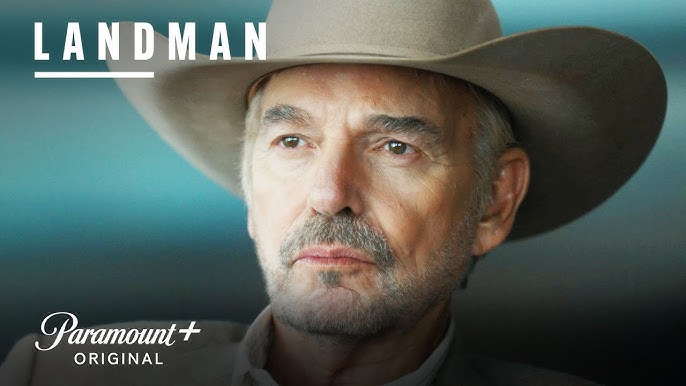


The end of Landman Season 2 did not just close a chapter. It redrew the map.

In the span of one finale, Cami Miller seized the wheel at M‑Tex, fired Tommy Norris, and unintentionally helped create a new competitor built from her own playbook. Several recaps and interviews frame it as a clean corporate split on paper, but a messy power struggle underneath. Entertainment Weekly put it plainly in its post-finale coverage: Cami fires Tommy, and that decision reshapes everything that comes next.
At the same time, Tommy does not drift into retirement or quietly take another job. He builds something new, with new money, and with people who used to work for Cami. By the time the finale ends, the show has set up a Season 3 storyline that looks less like a personal feud and more like a boardroom and field-level battle over rigs, contracts, and who controls the next wave of production.
Season 3 is also not hypothetical in the business sense. Paramount+ renewed Landman for a third season on Friday, Dec. 5, 2025, according to Landman.tv. The same report cites internal performance numbers: the Season 2 premiere drew 9.2 million views in two days, which the site calls the biggest premiere in Paramount+ history. Forbes and Esquire also cite the 9.2 million views figure, and Forbes adds that it represented a 262% increase from the Season 1 premiere.
With that momentum, the show’s writers now have a clear runway. They also have a clear problem to solve: what happens when Cami Miller, newly empowered at M‑Tex, has to face a rival built by the man who used to run her company.
- The finale’s hinge point: Cami fires Tommy, and the company fractures
- Tommy’s turning point: no more climbing, no more “jumping ships”
- The new company: CTT Oil Exploration and Cattle, and the people who follow Tommy
- Nate’s refusal and Cami’s leadership gap at M‑Tex
- The Cooper fields and the contract question: where Season 3 could get legally sharp
- Why Cami may have built her own worst opponent
- Season 3 logistics: renewal, viewership, and what we know about filming
- Opening Day Details: what Season 3 is positioned to deliver
The finale’s hinge point: Cami fires Tommy, and the company fractures
The Season 2 finale, dated Jan. 18, 2026 in post-finale coverage, lands with a major personnel decision at its center. (New York Post) Cami Miller, played by Demi Moore, fires Tommy Norris, played by Billy Bob Thornton. Entertainment Weekly’s coverage treats it as the core rupture that defines their relationship going forward, and Thornton himself frames the conflict around that firing.
Forbes ties that rupture to a specific disagreement leading into the finale. In its Season 3 status roundup, Forbes notes that Cami fires Tommy after he objects to M‑Tex’s “risky offshore gas drilling operation,” and he argues it is not worth it. That detail matters because it grounds the split in operational risk. It was not only about ego.
In other words, the finale positions Cami as a leader willing to push forward on high-risk drilling plans, even when her most experienced executive warns her off. It also positions Tommy as someone who will walk away rather than endorse a strategy he thinks could go wrong.
That tension is a ready-made Season 3 engine. It is also a realistic one in the terms the show itself has chosen. M‑Tex is not simply a “big company.” It is a company making big bets. Meanwhile, Tommy is not simply a disgruntled employee. He is a former president with the knowledge to become dangerous.
Tommy’s turning point: no more climbing, no more “jumping ships”
After getting fired, Tommy gets opportunities. He just does not take them.
Elle’s finale breakdown puts one of Tommy’s defining lines in plain view: “Finding another ship to jump on ain’t the problem… I’m not sure I want to jump on somebody else’s ship.” The language is simple, but the implication is huge. Tommy is not looking for another corporate home. He is looking for autonomy.
That choice becomes even sharper when Chevron enters the picture. Elle reports that Tommy meets Bob Knowles, a Chevron representative played by Colin Ferguson. Tommy tries to interest Chevron using Cooper’s fields as the hook, and the conversation turns toward the complications around rights and contracts.
Knowles ultimately backs away, according to Elle, because the legal situation is “messy,” and he does not want Chevron tied up in it. He still offers Tommy a lifeline: a vice president role at Chevron if Tommy walks away cleanly. Tommy declines.
Even if Season 3 never returns to Bob Knowles directly, the scene does two important pieces of work. First, it signals that major players are watching. Second, it establishes that Tommy had an “easy” out and refused it.
In a show centered on power, the refusal matters. It means the next steps are not accidental.
The new company: CTT Oil Exploration and Cattle, and the people who follow Tommy
Once Tommy decides not to go corporate, he goes entrepreneurial. The finale makes that pivot concrete.
People reports that Tommy gets Gallino’s backing and launches a new firm called CTT Oil Exploration and Cattle. AOL adds further detail, including the company’s full name and structure: “CTT Oil Exploration and Cattle, LLC.” AOL also explains what “CTT” stands for: Cooper, Tommy, and T.L. (AOL)
AOL’s recap then gives the kind of operational detail that becomes valuable when you start thinking about Season 3 conflict mechanics. Tommy describes himself as senior vice president. Cooper becomes president. T.L. runs the drills. (AOL) Those titles imply a division of labor, not just a handshake agreement.
Elle’s account adds the tone of the deal. Tommy pitches Gallino on investing in a venture designed to keep M‑Tex out of “the oil they discovered.” Gallino agrees, but warns Tommy about retaliation if he fails. (Elle) It reads like a business arrangement with consequences, not a friendly loan.
This is where the finale’s corporate war setup becomes hard to ignore. Tommy does not just build a new logo. He builds a company with capital, a drilling plan, and a warning from his backer that the other side will come for him if he stumbles.
Then comes the detail that probably stings Cami most: Tommy does not leave alone.
Entertainment Weekly reports that Tommy takes “most of Cami’s trusted team” with him. It specifically names Rebecca, Dale, Boss, and Nate as part of the group heading to his new venture. (Entertainment Weekly) Harper’s Bazaar similarly notes he recruits former M‑Tex employees, naming Ariana, Nate, Rebecca, and others, and it frames the finale as a direct setup for Tommy to challenge M‑Tex.
When a company loses an executive, it hurts. When it loses an executive and the executive takes key people, it becomes a stability issue.
For Season 3, the show now has a built-in pressure point. Cami is not only down a president. She is down personnel who understood her business, her culture, and her strategy.
Nate’s refusal and Cami’s leadership gap at M‑Tex
One of the most consequential “quiet” developments in the finale involves Nate.
After Tommy’s firing, Elle reports that Cami offers Nate the job Tommy used to hold. Nate does not accept. He resigns instead, which leaves Cami without a straightforward internal successor. (Elle) People’s recap matches the key outcome: Nathan refuses Cami’s offer to become president. (People)
Put those together, and the implication is straightforward. Cami tried to stabilize M‑Tex with a promotion. She failed.
That failure is not presented as a minor inconvenience. If a company the size and complexity of M‑Tex suddenly loses its president, and then loses the would-be replacement, the organization has to scramble. It has to redistribute authority. It has to hire. It has to reassure partners. It has to stop the bleeding.
Season 2 does not show us every operational ripple. However, it does establish the conditions. Season 3 can turn those conditions into story.
The Cooper fields and the contract question: where Season 3 could get legally sharp
A major part of the finale’s business tension appears tied to Cooper’s assets and rights.
Elle reports that Tommy tries to use Cooper’s fields to interest Chevron. Elle also reports Tommy asks Nate to void a contract made for Cooper’s oil rigs. Those lines hint at a Season 3 battleground that is less about bar fights and more about paperwork.
It is important to stay precise here. The sources above refer to “Cooper’s fields” and “Cooper’s rigs.” They do not all describe them as “the Cooper family’s former drilling sites” in so many words. Still, the point remains that Cooper’s rigs and fields sit near the center of Tommy’s next move, and that contracts tied to those rigs are contested enough to scare off Chevron. (Elle)
If you are looking for a plausible Season 3 escalator, it is right there. A conflict over control of production does not need to start with a takeover bid. It can start with a disputed contract, a contested lease, or an aggressive move to lock down rights before the other side does.
The finale’s Chevron scene also sets a scale reference. Tommy’s situation is complicated enough that a major player decides it is not worth the legal risk. (Elle) That means the writers have room to explore what those complications are, and who tries to weaponize them.
Why Cami may have built her own worst opponent
Season 3’s most interesting tension may be that Cami’s new rival is not an outsider.
Tommy ran M‑Tex. He knows how it thinks. He also knows who matters inside it, and the finale suggests he can convince those people to come with him.
At the same time, Tommy’s new company is not operating on fumes. It has Gallino backing, and Elle explicitly frames that investment as a move designed to cut M‑Tex out of valuable oil. (People, Elle)
That combination can turn into a particular kind of rivalry. It is not a random competitor showing up with a better product. It is a competitor built with insider knowledge, familiar personnel, and a strategy shaped by the same field realities M‑Tex deals with every day.
Cami, meanwhile, faces an internal control problem. She has to replace Tommy. She has to replace Nate. And she has to do it while knowing a new rival understands her weaknesses. (Elle, People)
If Season 3 wants to lean into corporate warfare, it does not need to invent motives. The motives were written into the finale’s structure.
Season 3 logistics: renewal, viewership, and what we know about filming
Beyond the story, the show’s real-world timeline also provides clues about what viewers might reasonably expect.
Paramount+ renewed Landman for Season 3 on Dec. 5, 2025, according to Landman.tv. (Landman.tv) Landman.tv also cites 9.2 million views in two days for the Season 2 premiere. Forbes and Esquire repeat that number, and Forbes adds the 262% jump from the Season 1 premiere. (Forbes, Esquire)
On production timing, New York Post reports Season 3 is expected to begin filming in spring 2026. (New York Post) A Yahoo item that syndicates People’s reporting quotes Sam Elliott pointing to April and May 2026 for shooting. (Yahoo) Forbes contributor Paul Tassi also cites Elliott’s April or May 2026 timeline, and notes that Season 1 and Season 2 filmed in February 2024 and April 2025, respectively. (Forbes, Paul Tassi)
No premiere date is confirmed in the sources above. Still, Decider and Forbes both point to the show’s annual release pattern, with Season 1 arriving in November 2024 and Season 2 arriving in November 2025. They suggest Season 3 could land in Q4 2026 if that schedule holds. (Decider, Forbes)
That matters for the audience conversation because it suggests the M‑Tex versus CTT fight will not sit on the shelf for years. The production cadence, as described in coverage, implies the show wants to move quickly.
Opening Day Details: what Season 3 is positioned to deliver
Season 2’s ending is explosive because it makes the conflict legible.
Cami fires Tommy. (Entertainment Weekly) Tommy refuses the safe Chevron offer, then starts CTT Oil Exploration and Cattle with Gallino backing. (Elle, People) He leaves with multiple people from Cami’s orbit, while Cami loses her first-choice replacement when Nate resigns instead of taking the job.
From those verified points, Season 3 is positioned to explore a few clear questions that arise directly from the finale’s actions:
- Can Cami rebuild leadership at M‑Tex after losing Tommy and then Nate?
- How aggressive will M‑Tex get if Cami sees CTT as a direct threat?
- How stable is CTT if it is built fast, staffed by defectors, and funded by Gallino?
- Will the disputed, “messy” legal situation around Cooper’s fields and rigs become the battlefield itself?
The finale does not answer those questions. It does something more useful. It sets them up with concrete moves, named players, and a new company with a real structure.
Season 3 now has to follow through.