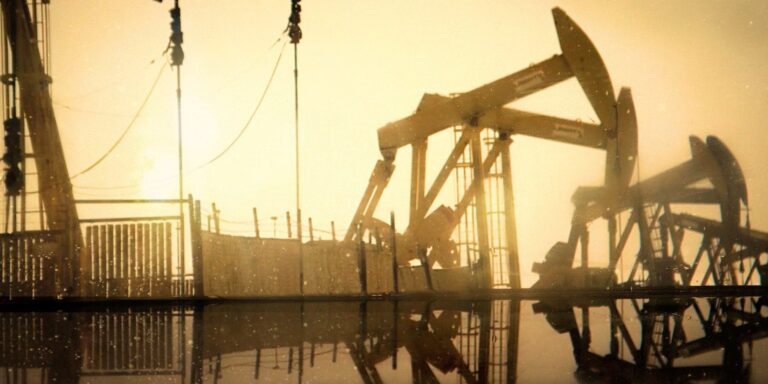
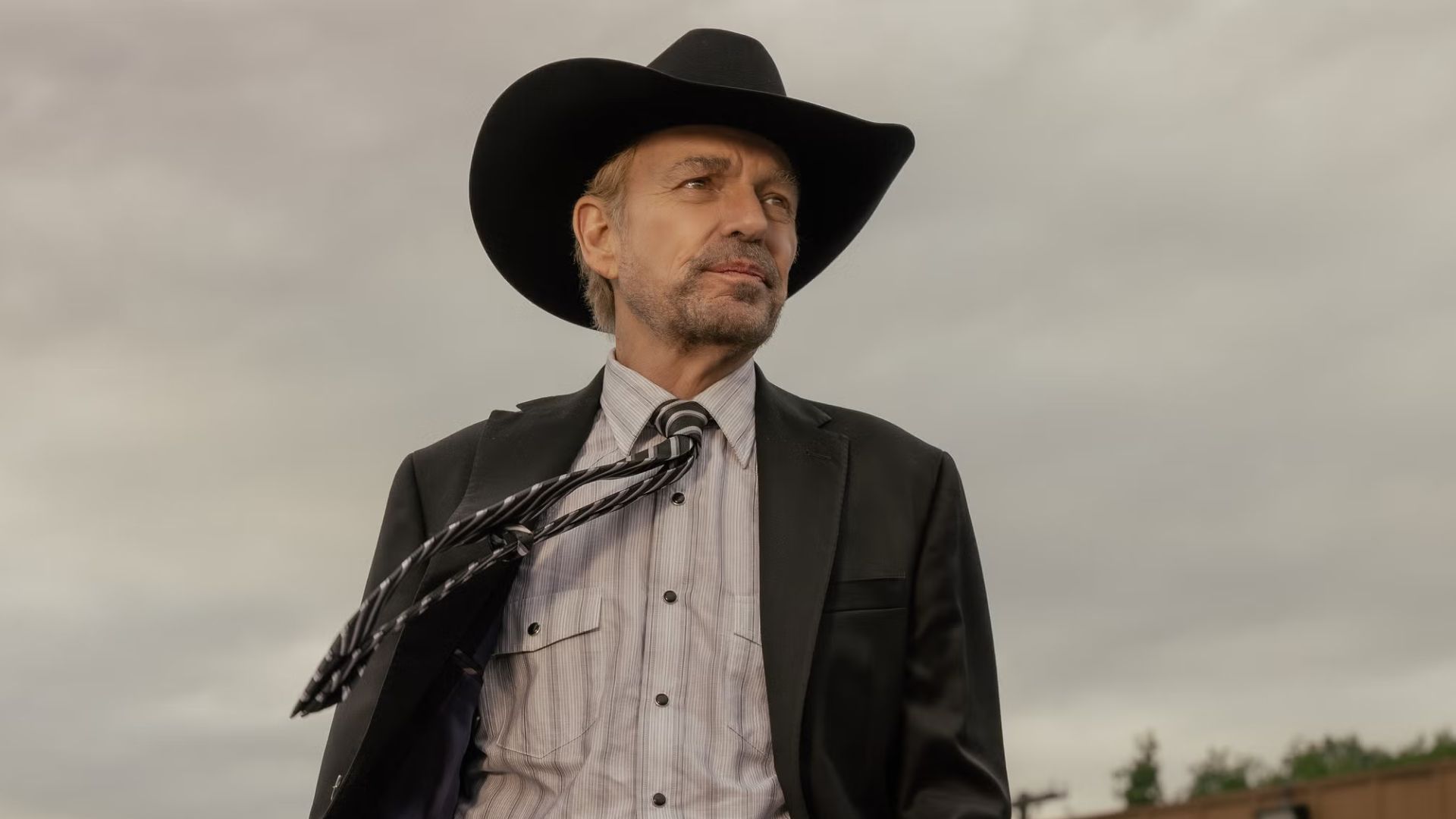

When characters on Paramount+’s Landman talk about “wildcatting,” they are not using a slang word loosely. The term has a long paper trail in dictionaries, energy data definitions, and even government regulations. Those sources point to the same basic idea.
Wildcatting is drilling a high-risk, exploratory well in a place that is not proven to produce oil or gas. In other words, it is a bet on geology.
Just as importantly, “wildcatting” still shows up in modern reporting. Regulators and industry trackers continue to use it to describe exploration wells. That includes “dry” wells that find nothing, and discovery wells that open up new resources.
- The simplest definition: drilling where production is not proven
- Regulators define “wildcat well” in practical, measurable ways
- Wildcatting vs. development drilling: why the term signals risk
- Why Landman characters would care: leases come before the drill bit
- Wildcatting has a long history of long odds
- In today’s world, the “wild” part can still cost millions
- Wildcat wells still happen, and regulators still report the results
- A short note on the term’s roots, and why it keeps surviving
- Where Landman fits in (and why viewers keep hearing the word)
- What Happens Next
The simplest definition: drilling where production is not proven
Start with the clean, dictionary-level meaning. Merriam-Webster defines the verb “wildcat” (in oil and gas use) as drilling an experimental well “in territory not known to be productive.” It also defines a wildcatter as someone who drills in territory not known to be an oil field. (Merriam-Webster)
Those definitions matter because they match how regulators and energy agencies describe similar concepts. The key point is not the drilling method. The key point is the uncertainty.
Here is the plain-language core of the term, using the same idea those sources share:
- A wildcat well is drilled outside known producing areas, or before anyone has proven production there.
- Therefore, wildcatting carries a higher chance of failure than drilling inside a proven field.
Regulators define “wildcat well” in practical, measurable ways
Next, look at how rules and agencies describe a wildcat well. Federal rule language captures the classic meaning clearly.
Under the U.S. EPA’s greenhouse gas reporting rule definitions, the agency states:
“Wildcat well means a well outside known fields or the first well drilled in an oil or gas field where no other oil and gas production exists.” (40 CFR § 98.238, via Cornell Law School’s Legal Information Institute)
That definition gives you two common “wildcat” situations. First, you drill outside known fields. Second, you drill the first well in a field that has no prior production.
States also define “wildcat well” in ways that help regulators classify drilling activity. Oregon’s administrative rule definitions say a “Wildcat Well” is a drilling or producing well located in an area that is not a “Proved Oil or Gas Area.” (Oregon Admin. Code § 632-010-0008, via Cornell LII)
New Mexico goes further and builds distance into the definition. In most New Mexico counties, the rule says a wildcat well is at least 1 mile from both the outer boundary of a defined producing pool in the target formation and a producing well in the target formation. In four counties listed in the rule, the threshold becomes 2 miles. (19.15.15.8 NMAC, via Cornell LII)
That “mile” language helps readers understand something important. Regulators do not treat “wildcat” as a vibe. They can treat it as a location-based category.
Wildcatting vs. development drilling: why the term signals risk
To explain wildcatting well, you also need to explain what it is not. The U.S. Energy Information Administration draws a useful line between development wells and exploratory wells.
EIA defines a development well as a well drilled “within the proved area of an oil or gas reservoir” to a depth known to be productive. (EIA table definitions)
In contrast, EIA defines an exploratory well as a well drilled to find production in an area considered unproductive, to find a new reservoir in a known field, or to extend the limits of a known reservoir. (EIA table definitions)
Then there is the grim outcome everyone tries to avoid. EIA defines a dry hole as an exploratory or development well that cannot produce enough to justify completion. (EIA table definitions)
Put those together and the logic becomes straightforward. Development wells live in proven zones. Exploratory wells push boundaries. Wildcat wells sit at the high-risk edge of exploratory drilling.
Why Landman characters would care: leases come before the drill bit
Even a “wild” drilling idea becomes real only after a company controls the rights to drill. That is where the job title “landman” connects directly to wildcatting.
The American Association of Professional Landmen (AAPL) describes a landman as a key member of an exploration and production team. AAPL says landmen “negotiate directly with landowners to acquire leases for the exploration and development of minerals.” (AAPL)
In practice, that lease work often happens before the public sees any rig activity. It can also happen before anyone knows whether the prospect will work. That is part of why wildcatting creates drama on screen. It puts money and reputation behind uncertainty.
Wildcatting has a long history of long odds
Wildcatting did not earn its reputation by accident. Several sources describe low historical success rates for pure exploration drilling.
Pennsylvania’s Department of Conservation and Natural Resources, in interpretive materials for Oil Creek State Park, says exploratory “wildcat” wells had “about a 10 percent chance” of success. (Pennsylvania DCNR)
A separate American Association of Petroleum Geologists (AAPG) statistics writeup, discussing exploratory drilling data from the mid-20th century, reported “new-field wildcats” with an average success-to-failure ratio around 11.34% in the period it analyzed. That article also argued that only one new-field wildcat out of every 44 discovered a field with at least 1 million barrels of ultimate reserves, again within that historical dataset. (AAPG statistics writeup hosted at MIT’s “lost-contact” archive)
Those numbers are historical, so you should label them that way. Still, they help explain why “wildcatter” became a cultural shorthand for a gambler. Even when success happens, big success happens less often.
In today’s world, the “wild” part can still cost millions
The risk is not only geological. It is financial.
Diamondback Energy, a major Permian operator, gives a concrete look at well cost expectations through its 2025 guidance. In company disclosures, Diamondback projected 2025 Midland Basin well costs of $550 to $580 per lateral foot. It projected Delaware Basin well costs of $860 to $910 per lateral foot. (Diamondback Energy 2025 guidance)
Diamondback also cited an average lateral length of about 11,500 feet. (Diamondback Energy)
If you combine those two disclosed figures, you can estimate an implied per-well cost range based on the lateral-foot metric:
- Midland Basin: 11,500 feet × $550 to $580 per foot equals about $6.325 million to $6.670 million.
- Delaware Basin: 11,500 feet × $860 to $910 per foot equals about $9.890 million to $10.465 million.
Those are not universal costs for every operator and every geology. They are, however, specific, dated figures from a real company’s 2025 guidance. They show why wildcatting feels like a high-wire act. A single unsuccessful well can burn through a budget quickly.
Market expectations also shape how risky drilling feels. In the Dallas Fed Energy Survey page for Q1 2025, respondents said they need about $65 per barrel WTI on average to “profitably drill a new well.” They also said they need about $41 per barrel WTI on average to cover operating expenses for existing wells. (Dallas Fed Energy Survey, Q1 2025)
That gap matters. Companies can sometimes keep existing production going at lower prices. New drilling often requires a higher price bar. A wildcat well raises the stakes further, because it can become a dry hole.
Investing-style explainers also emphasize that point directly. The Motley Fool’s glossary entry on wildcat drilling notes that companies can risk millions on a single well without guaranteed success. (The Motley Fool)
Wildcat wells still happen, and regulators still report the results
It is tempting to think wildcatting belongs only to early oil history. Yet modern regulators still publish “wildcat well” updates in routine exploration reporting.
Norway’s offshore regulator, the Norwegian Offshore Directorate, provides clear examples in 2025 exploration results.
On Sept. 19, 2025, the Directorate reported a dry well in the North Sea: wildcat well 34/8-20 S in the “Narvi nord” prospect. The report said the well was about 130 kilometers west of Florø and was terminated at 3435 meters TVD. (Norwegian Offshore Directorate)
A few weeks earlier, the same regulator reported a discovery. On Aug. 25, 2025, it reported an oil and gas discovery near the Fram field in the North Sea, wildcat well 35/11-31 S. The Directorate estimated recoverable resources of 0.1 to 1.1 million Sm³ of oil equivalent. It also expressed that estimate as 0.6 to 6.9 million barrels. (Norwegian Offshore Directorate)
Those two updates show the full wildcat spectrum in real time. One well comes up dry. Another finds something measurable, even if the range is wide at the early stage.
U.S. offshore exploration offers another recent datapoint, although Reuters did not frame it with the same regulator “wildcat well” terminology. Reuters reported on Sept. 5, 2024 that Talos Energy struck oil and gas in the Gulf of Mexico. The report cited an estimated 15 to 25 million barrels of oil equivalent, with first production expected in mid-2026. (Reuters, Sept. 5, 2024)
The through-line is simple. Exploration still operates under uncertainty, and public reporting still has to describe that uncertainty.
A short note on the term’s roots, and why it keeps surviving
Wildcatting has deep roots in U.S. petroleum history. The Drake Well, which helped launch the early American oil industry, struck oil in 1859 in Pennsylvania. (Drake Well Museum)
Pennsylvania’s Oil Creek region, now interpreted through sites like Oil Creek State Park, uses “wildcat” terminology directly in its public history materials. DCNR even connects the name “Wildcat Hollow” to those early exploratory wells and their low chances. (Pennsylvania DCNR)
That history helps explain why writers still use the word today. It compresses a lot of meaning into one term. It signals uncertainty, ambition, and the real possibility of failure.
Where Landman fits in (and why viewers keep hearing the word)
As of December 2025, the Houston Chronicle reported that Paramount+ renewed Landman for a third season. The Chronicle also reported that Season 2 premiered Nov. 16. It described the series as co-created by Taylor Sheridan and Christian Wallace, and based on Wallace’s “Boomtown” podcast. (Houston Chronicle, Dec. 2025)
That context matters for terminology. Shows built around landwork, leases, drilling decisions, and corporate conflict naturally use words like “wildcat.” The term sits at the crossroads of geology, money, and persuasion. It also fits the landman’s world because leases can be signed before the results exist.
What Happens Next
If you keep watching Landman, listen for how characters use “wildcatting” as a signal about risk. Sometimes it will describe geography, meaning outside proven production. Other times it will describe a first attempt in an area. In both cases, the factual core stays the same. Wildcatting means drilling before the rock has proven itself.
For future episodes and future headlines, one detail can help you decode the stakes fast. Ask whether the well is classified as development or exploratory, and whether it sits inside a proved area. EIA’s definitions give you that framework. From there, the business tension is easy to understand. A company can spend millions on a single well, and still end up with a dry hole.